RESEARCH COMMITTEES
The fifth Period (2006 - )
Click here The fourth Period
Click here The Third Period

BIO-NANOTECHNOLOGY RESEARCH COMMITTEE
Chairman: Shigeki Mitaku
Professor , Graduate School of Engineering, Nagoya University
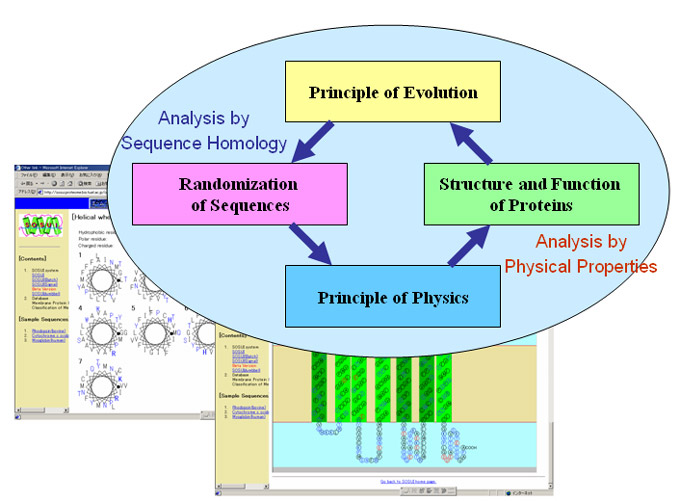
    Proteins play essential roles in the reproduction and homeostasis of biological organisms. The human body, for example, contains more than 20,000 kinds of proteins whose amino acid sequences have now been revealed by the human genome project. Today, questions about the structure and the function of proteins have changed from problems of individual proteins to those of total proteomes. In the bio-nanotechnology research committee, we aim to elucidate the design concept of proteins, the bio-nanomachines.

BIO-SPM RESEARCH COMMITTEE
Chairman: Tatsuo Ushiki
Professor, Graduate School of Medical and Dental Sciences, Niigata University
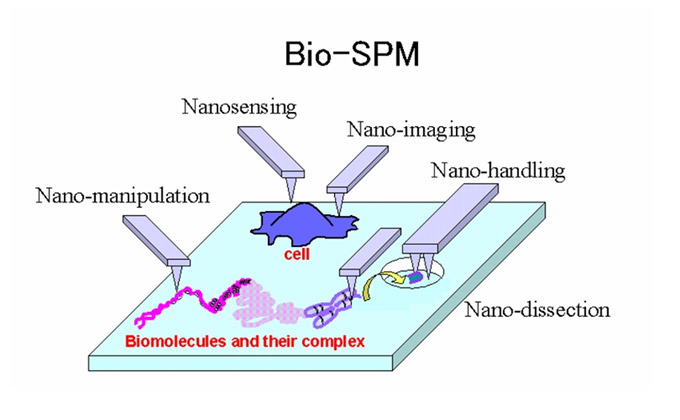
    The scanning probe microscope (SPM) has been widely applied to the studies on the surface morphology in biological fields, and developed as a unique tool not only for the visualization of single molecules and/or atoms, but also measurement of their properties and the manipulation of atomic-scale structures. However, biological applications of the SPM are still limited as compared with those of light microscopes and electron microscopes. In order to explore the potential abilities of SPM technology, the development of a new field with a fusion of advanced SPM technology and biology should be facilitated more rapidly and extensively. Thus, this research committee aims to exchange valuable information of the mutual interest among SPM researchers, researchers engaged in the related nanotechnologies, and cell and/or molecular biologists. The committee also explores the potential abilities of applications of various newly developed nanotechnologies (including nanobioimaging, functional nanosensing, and nanoprocessing) to biological studies.

SPINTRONICS RESEARCH COMMITTEE
Chairman: Sadamichi Maekawa
Professor, Institute of Materials Research, Tohoku University
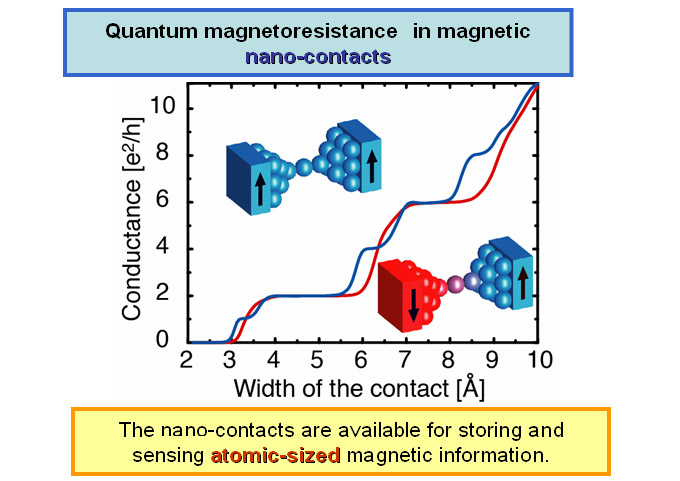
    In magnets, since the electrons are spin-polarized, there exist both charge and spin currents. Therefore, novel device properties emerge when spin currents are injected into devices with dimensions smaller than the spin diffusion length, which is between several 100 nm and several μm. The research of the spin current and its properties have been growing, since the discoveries of the giant magnetoresistance (GMR) in magnetic multi-layers and the tunnel magnetoresistance (TMR) in magnetic tunnel junctions. The nano-sized devices based on the spin current are expected to play a key role in the electronics of the 21st century. This emerging field is called "spintronics". Quantum computing devices (qubits) utilizing the spin current are also expected in the near future. We develop novel spintronic devices based on the spin current.

NANOCARBONS RESEARCH COMMITTEE
Chairman: Morinobu Endo
Professor , Shinshu University
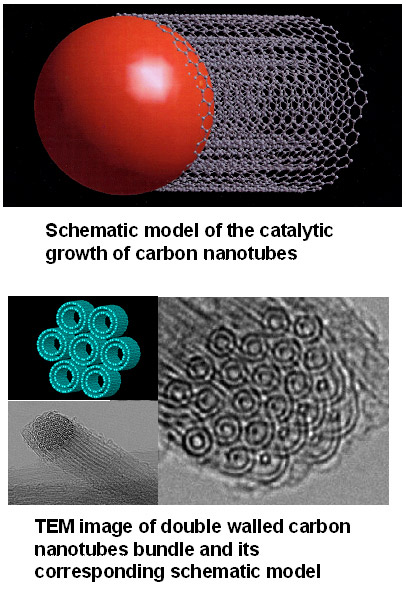
    Nanocarbons can be defined as carbon materials built from sp2 bond building blocks at a nanometer scale, and include various forms of carbons ranging from fullerene, carbon nanotube to nano-porous materials. Among them, the recently highlighted double- or triple-walled carbon nanotubes have attracted wide range of scientists due to their unique morphology and thermal stability, and their superior mechanical properties compared to those of other types of nanotubes. Over the last decades, nanocarbons have acted as a vanguard among many types of nanomaterials due to their intriguing properties, which enabled them to be used as reliable, important component in manufacturing and engineering processes. In this background, our research committee will make progress on the basic science and practical applications of nanocarbons as described below: (a) create novel and functional nanocarbons at the atomic level, (b) develop and establish the advanced nano-engineering process based on novel functions of nanocarbons (e.g., electronic, physical and chemical functions).

BIO-NANOMACHINE STRUCTURE COMMITTEE
Chairman:Ryota Kuroki
Quantum Beam Technology Directorate, Japan Atomic Energy Agency
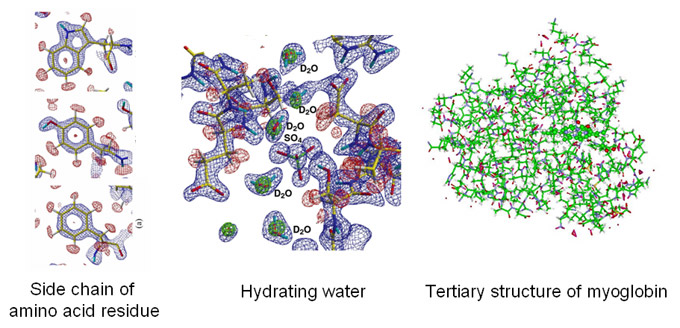
    Bio-nanomachines construct complex and precise systems within living systems. Polypeptide chains are synthesized from amino acids, they do not show any functions as a bio-nanomachine. Once they become folded into a protein with tertiary structure, they reveal functions as a bio-nanomachine. The aim of this committee is to understand the function of bio-nanomachines from a structural point of view. Therefore, our approach is to characterize the hydrated structures of nanomachines, including information relating to hydrogen atoms by neutron diffraction. This information should allow us to design and develop useful bio-nanomachines. In this committee, we would like to gather forefront knowledge for the realization of bio-nanomachines.