RESEARCH COMMITTEES
The sixth Period (2009 - )
Click here The fifth Period
Click here The fourth Period
Click here The Third Period

BIO-SINGLE MOLECULES RESEARCH COMMITTEE
Chairman: Yuji C. Sasaki
Professor , The University of Tokyo
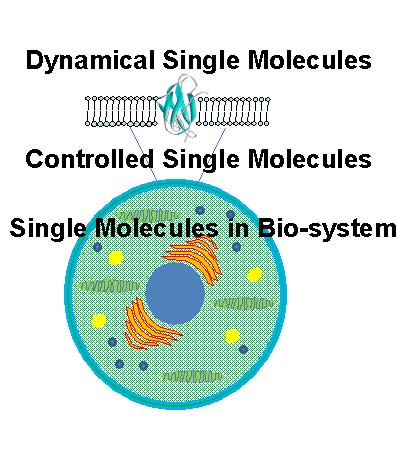
    In order to truly understand biological phenomena, we should measure both dynamical behaviors and structures of individual single protein molecules. Fortunately, progress in molecular biology has been understanding of many molecular interactions in averaged macro-units., we must need both dynamical observations of individual single protein molecules and "Single Molecular Science", when we studied the important biological behavior of a local transient. In this committee, we have to discuss as follow: (1) limitations of time adn spatial accuracy can be measured at single molecular level. (2) Restricting behaviors of individual single molecules in biological sustems. (3) Need for Single Molecular Science. Keywords of our committee are "Dynamical Singles Molecules", "Bio-System" , and " Controlled Functional Single Molecules".

BIO-SPM RESEARCH COMMITTEE
Chairman: Tatsuo Ushiki
Professor, Graduate School of Medical and Dental Sciences, Niigata University
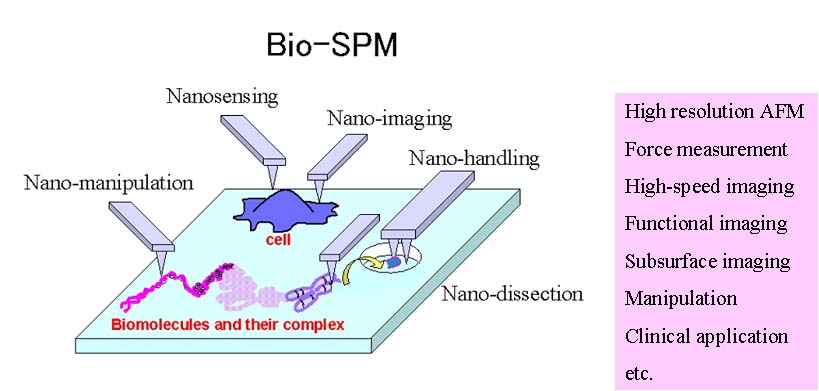
    The scanning probe microscope (SPM) has been widely applied to the studies on the surface morphology in biological fields, and developed as a unique tool not only for the visualization of single molecules and/or atoms, but also measurement of their properties and the manipulation of atomic-scale structures. However, biological applications of the SPM are still limited as compared with those of light microscopes and electron microscopes. In order to explore the potential abilities of SPM technology, the development of a new field with a fusion of advanced SPM technology and biology should be facilitated more rapidly and extensively. Thus, this research committee aims to exchange valuable information of the mutual interest among SPM researchers, researchers engaged in the related nanotechnologies, and cell and/or molecular biologists. The committee also explores the potential abilities of applications of various newly developed nanotechnologies (including nanobioimaging, functional nanosensing, and nanoprocessing) to biological studies.

SPINTRONICS RESEARCH COMMITTEE
Chairman: Sadamichi Maekawa
Professor, Institute of Materials Research, Tohoku University
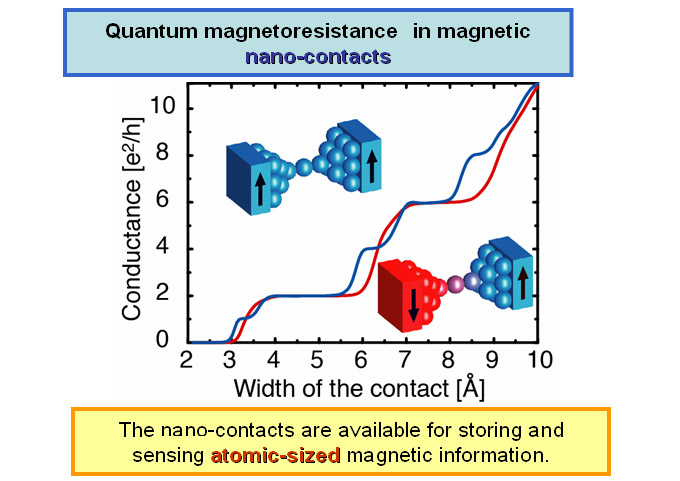
    In magnets, since the electrons are spin-polarized, there exist both charge and spin currents. Therefore, novel device properties emerge when spin currents are injected into devices with dimensions smaller than the spin diffusion length, which is between several 100 nm and several μm. The research of the spin current and its properties have been growing, since the discoveries of the giant magnetoresistance (GMR) in magnetic multi-layers and the tunnel magnetoresistance (TMR) in magnetic tunnel junctions. The nano-sized devices based on the spin current are expected to play a key role in the electronics of the 21st century. This emerging field is called "spintronics". Quantum computing devices (qubits) utilizing the spin current are also expected in the near future. We develop novel spintronic devices based on the spin current.

NANOCARBONS RESEARCH COMMITTEE
Chairman: Riichiro Saito
Professor , Tohoku University
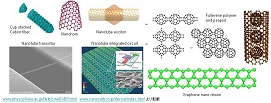
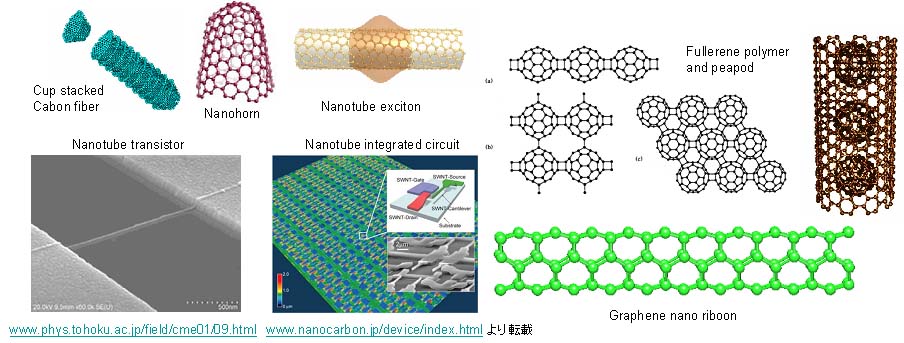
    Nano carbon is defined by fullerenes, carbon nanotubes, porous carbon materials, nano-diamond, graphone, graphite which consist only of carbon atoms connected by many covalent bonding such as sp, sp2, and sp3 hybridized chemical bonding in the nano meter size. All nano carbon materials are expected to be a singnificant and advanced performance as a prototype of nano material science and technologies, especially for the application for nano sized devices. A keyword for nano-carbon is to synthesize the material controllably, that is, the sunthesizing processes, material making processes, and making devices processes are important for finding a new physics or functionalized in the chemistry. The control of these processes makes nano-carbon be innovative and fundamental materials in the 21st century. In Nano-carbon group, we discuss from the basic physics of nano carbon to its applications, which covers different fields of science and technology which bring new ideas for the electronic devices, semiconductor devices, opto-electronic devices and further, combined techniques such as NEMS, biology, and medical application. In the Nano-Carbon meeting, members of the group and some invited speakers overview recent activity from the beginning, especially for many people in the different fields. By exchanging the information from different backgrounds, a new original work should be generated, which is our strategy. In order to encouraged young scientists, we plan to organize a summer school on nano-carbon materials.

Hydration nano structure research committee
Chairman: Ichiro Tanaka
Assocuate Professor, Ibaragi University

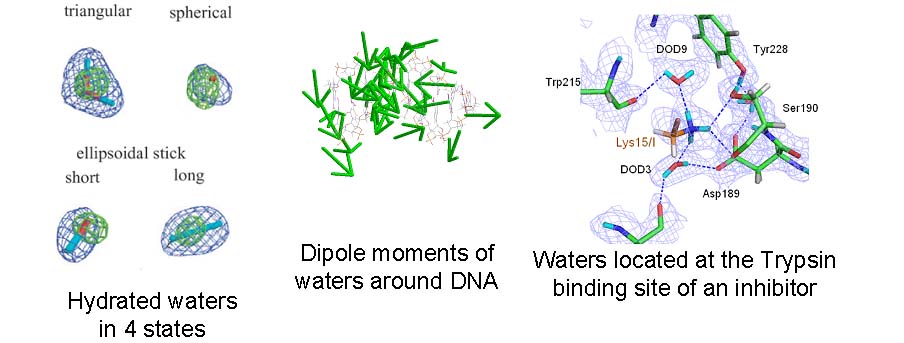
    Around proteins and DNA which control function in biological system in nano-scale, there are many waters with various shapes whch bind, common and relatively small simple molecules on the earth, but they may have more unknown properties in biological system than expected. Waters play important roles behind the scenes, continuously fluctuating by themselves in nano-scale, such as in enzymatic reactions; for example, 1) they may help substrates recognize enzymes just before enzymes function: 2) they are transferred between enzymes and substrates or others and proton transfer may simultaneously occurs, and as a result hydrogen bonds are formed and broken during chemical reactions; 3) finally waters go back to enzymes as before after their reactions.
    To
    understand such hydration in nano-structure, neutron diffraction method which is good at determination of hydrogen position will have an important part, and it is expected that it will accelerate the understanding of hydration with the operation of J-PARK. On the other hand, X-ray, IR, computer science, and genetic engineering etc. are also thought to bring important knowledges complementarily.
    The committee expects members in various fields interested in hydration in nano-structure to discuss in one ring as possible, to try to find new direction, and to aim at a rapid progress in related fields.